The Plot / Hair removal guides
Hair Removal Cream vs. Shaving: What’s Better for Your Skin?
If you’re comparing hair removal cream and shaving, start with what you’d like to change about your current routine. The little cuts? Stubble the next morning? Skin that feels sore after a rushed shave?
Hair removal cream avoids the blade, and its results tend to last longer than shaving. A razor gives you an immediate result and control around small areas. Both can irritate skin, so neither gets an automatic vote for being gentler. The American Academy of Dermatology’s guide to hair removal explains the benefits and limits of each.
What actually happens to the hair?
A razor cuts hair at the skin’s surface. Hair removal cream, also called a depilatory, weakens the hair’s keratin structure so the hair can be wiped away. Neither method pulls hair out from the root.
That helps explain the difference in regrowth. Cream can remove hair just below the surface, so you may get more time before it becomes noticeable again. But it won’t give you the same stretch between sessions as waxing. Cleveland Clinic explains how depilatory creams work.
And the familiar prickly feeling after shaving? It doesn’t mean your hair has become thicker. Shaving leaves a blunt tip, which can feel coarse as it grows out. It doesn’t change the hair’s thickness, color or growth rate, according to Mayo Clinic.
If your razor keeps leaving nicks
Cream takes a blade out of the routine. That may appeal if you’re tired of catching your ankle or going over the same patch again and again.
It does ask for a different kind of care, though. You need to follow the product’s patch-test instructions, use it only on approved areas and keep an eye on the timer. Leaving it on longer can cause irritation or a chemical burn. If it starts to sting or burn, remove it and rinse immediately—don’t wait for the timer.
If you’d rather keep shaving, look at the shave itself. Cleveland Clinic recommends warm water, shaving cream or gel, a sharp blade and a first pass in the direction your hair grows. Rinse the blade as you go and moisturize afterward. Pressing harder with a dull razor or repeatedly shaving the same spot can make an everyday task uncomfortable.
Sensitive skin makes this more personal
“For sensitive skin” isn’t a promise that a product will agree with yours. A patch test matters, but it isn’t a reason to ignore an existing skin problem.
Cleveland Clinic advises avoiding depilatory creams if you have sensitive or damaged skin, or a chronic skin condition. If you have eczema, frequent reactions or aren’t sure what’s causing your irritation, ask a dermatologist before trying one.
A razor can cause trouble too. If either method repeatedly leaves you sore, inflamed or with painful bumps, pause the routine and get advice rather than trying to push through it.
If ingrown hairs are your main concern, our guide to caring for ingrown hairs covers what to do about an existing bump and changes to consider once your skin settles.
Which one fits your day?
Shaving is convenient when you need a quick touch-up or want to shape a small area. There’s no cream to leave on while you wait, although taking time to prepare your skin still matters.
Cream may suit a larger, approved body area when you’d prefer to avoid a blade. It takes several minutes to work, and you need to plan ahead for the patch test specified on the label.
You don’t have to use the same method everywhere. But don’t shave over skin you’ve just treated with cream to chase a missed hair. Follow the product’s directions for when you can treat the area again.
Using Plot Twist? Here are the details.
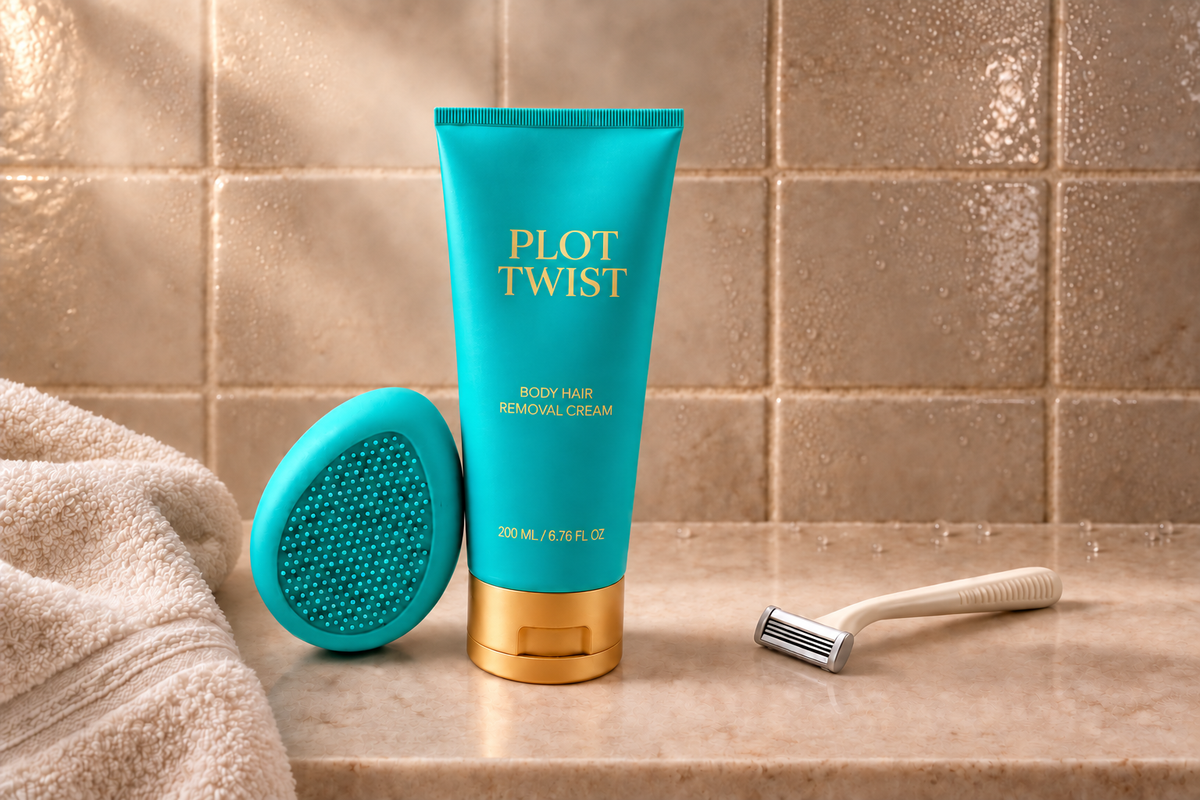
Plot Twist Body Hair Removal Cream comes with a reusable silicone Pebble for removing the cream and hair. Its directions call for a patch test 24 hours before every use.
Check a small section at five minutes. Never leave it on for more than ten minutes in total. Remove it and rinse thoroughly, following the instructions on your pack.
It’s intended for approved external body areas, including the bikini line. That does not include the genitals or perianal area, and it isn’t a face cream. Check the full directions and area guidance before applying it.
If your current routine leaves your skin comfortable and gives you a result you like, there’s no need to change it. If it doesn’t, the useful question is what you want to improve—and what your skin can tolerate.
Still weighing up other options? Read hair removal cream vs. waxing: pain, cost, and how long results last.
Ben Tabai is the founder of Plot Twist. This article includes his brand’s product. The text was drafted with AI assistance and reviewed for accuracy. This guide is general information, not personalized medical advice.
What would you like to change about your routine?
For a comparison with a method that removes hair from the root, see hair removal cream vs. waxing. If you are researching dark dots or bumps after shaving, start with our strawberry legs guide to understand the possible causes.