The Plot / Hair removal guides
Strawberry Legs After Shaving: Causes and What Helps
What causes strawberry legs after shaving? Learn what dark dots and bumps may mean, what can help, and where blade-free hair removal fits.
A practical guide to “strawberry legs,” what the dots may mean, and when changing your hair-removal routine is worth trying.
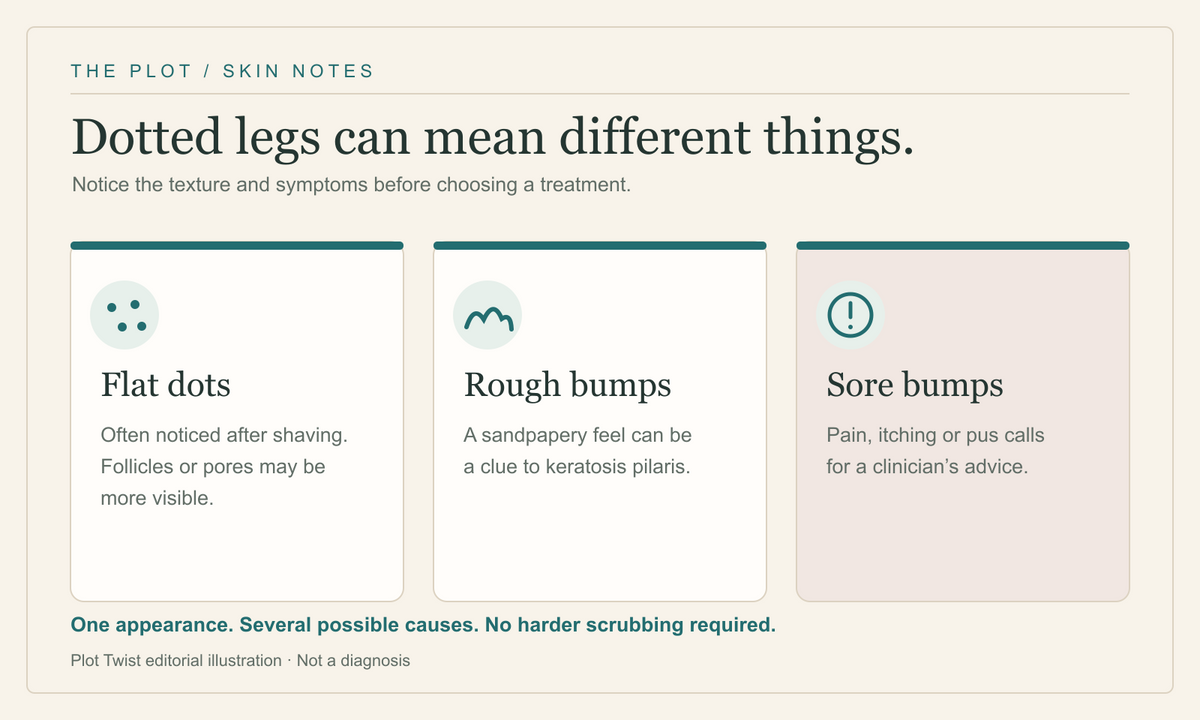
You shave, rinse, and still see tiny dark dots. That look is often called strawberry legs, but the name does not tell you what is happening in your skin. The dots may be visible or clogged follicles, a hair growing back into the skin, or rough bumps from keratosis pilaris. If they hurt or contain pus, the next step is different again. Look at the texture and symptoms before you reach for a scrub or a closer shave.
First, read the dots
Mostly flat, dark dots? You may be seeing hair follicles more clearly after shaving, sometimes alongside oil and dead skin in the pores. A dry shave or dull razor can add irritation. Cleveland Clinic explains why several things can create this dotted appearance.
A raised bump centered on a hair? An ingrown hair may be involved. Resist the urge to pick or dig at it; that can make the area more inflamed.
For care steps and symptoms that need attention, read our guide to ingrown hairs and repeat bumps.
A field of small bumps that feels rough, almost like sandpaper? That may be keratosis pilaris. A closer shave is unlikely to solve it. Gentle, consistent skin care is a better place to start, and a dermatologist can confirm what it is.
Painful, spreading, or pus-filled bumps? Pause the cosmetic fixes and get medical advice. Folliculitis is one possibility; a clinician can distinguish it from an ingrown hair or another condition.
These are clues, not a diagnosis. If the pattern is unclear or keeps returning, ask a dermatologist rather than guessing from a photo.
If shaving seems to be the trigger, change the shave
You do not need a ten-step routine. Start with one or two adjustments you can actually keep:
- Soften the hair first. Shave after wetting the skin and hair, and use shaving cream or gel.
- Use a clean, sharp razor. Let it glide with light pressure in the direction the hair grows. Repeated passes and a dull blade can make an irritated area feel worse. These basics follow the American Academy of Dermatology’s shaving advice.
- Moisturize after washing. A simple moisturizer, applied while skin is still damp, helps with dryness. If your skin reacts easily, a fragrance-free option may be easier to tolerate.
- Be measured with exfoliation. If your skin is calm, gentle exfoliation may help with buildup. Stop if it stings, dries, or irritates the area. The AAD’s keratosis pilaris guidance cautions against overdoing it.
Give the skin a chance to settle. Do not scrub over broken, sore, or inflamed spots to try to make them disappear faster.

Keep the routine gentle. If a step makes your skin uncomfortable, stop and reassess.
Would a hair-removal cream change the picture?
If the dots or bumps appear after every shave, taking a break from the razor can help you see whether the blade is part of the problem. A depilatory cream removes hair without shaving, but it does not treat keratosis pilaris, folliculitis, or every cause of dotted-looking legs. Creams can also irritate skin or cause chemical burns when used incorrectly; Cleveland Clinic covers that tradeoff.
We make Plot Twist Body Hair Removal Cream, so here are the limits as clearly as the option: use it only on the approved external body areas and intact skin. The current directions call for a patch test 24 hours before every use, checking a small area at five minutes, and never exceeding ten minutes total. Rinse immediately if you feel burning, itching, or discomfort. Do not apply it to irritated, broken, or recently shaved skin. Check the full FAQ and area restrictions before use.
If you are unsure whether a depilatory suits your skin, ask a dermatologist. You can also keep shaving if a gentler shave works for you; there is no reason to switch methods just because a label says “strawberry legs.”
When to get more than routine advice
Seek a dermatologist’s advice if the bumps hurt, swell, fill with pus, spread, or continue despite a gentler routine. A professional can help identify the cause and suggest care that fits it. Adding stronger exfoliants to already upset skin is unlikely to be a useful experiment.
Quick answers
Do strawberry legs mean I shaved wrong?
No. Shaving can make dots or bumps more noticeable, but rough keratosis pilaris and other follicle concerns can create a similar look. The texture and symptoms matter.
Should I exfoliate every day to clear the dots?
No single schedule fits every cause or every skin type. Follow your exfoliant’s directions, start gently, and stop if the area becomes dry or irritated. Painful or pus-filled bumps call for medical advice, not a stronger scrub.
Will hair-removal cream get rid of strawberry legs?
It removes hair without a blade, so it may be worth considering if shaving seems to trigger irritation. It is not a proven cure for the dotted appearance or for a skin condition. Follow the product’s patch-test, body-area, and timing directions.
If you are deciding whether to change methods, read our hair removal cream vs. shaving guide for the everyday tradeoffs.
Sources: Cleveland Clinic on strawberry legs, AAD on shaving, AAD on keratosis pilaris, AAD on folliculitis, and Cleveland Clinic on depilatories.
Plot Twist makes the cream mentioned above. This guide was drafted with AI assistance and reviewed against the linked sources and current product directions. It is general information, not a diagnosis or personal medical advice.